
Set a bankroll that matches how Golden Fish actually plays
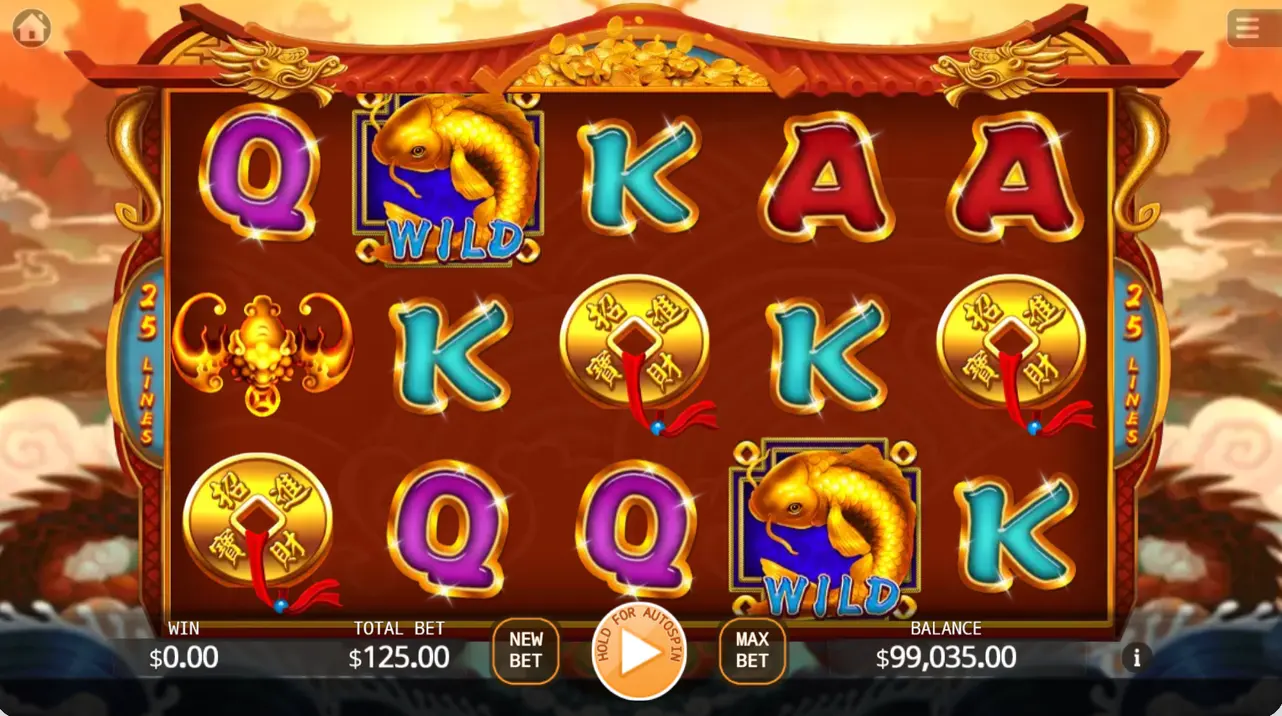
Golden Fish runs on 25 fixed paylines across a standard 5x3 grid, with stakes stretching from 0.25 up to 125 per spin. That range means the same session can feel completely different depending on where you set your bet — a point worth deciding before you load the reels, not while you're watching them.
The game sits at medium volatility. In practice, that means longer stretches without a big hit than a low-volatility title, balanced by free spins and a bonus feature that can turn a session around when they land. Medium volatility rewards patience with your bankroll more than it rewards chasing a stake increase after a dry spell.
A workable first step: decide on a total session budget, then divide it by the number of spins you'd like to get through at your chosen bet size. If a 0.25 bet gives you 200 spins and a 5.00 bet gives you 10, pick the number that actually lets you play the feature-driven mechanics this slot is built around.
Golden Fish also offers a bonus buy option, letting you pay directly for the free spins round instead of triggering it through play. Treat this the same way you'd treat any single large wager — decide the maximum you're willing to spend on it before you open the menu, and stop there regardless of the outcome.
There's a range across sources on the game's exact return figure, sitting between roughly 94% and 96% depending on where you check. Either way, the math is built for long-run house edge, not for predictable short-session outcomes — plan your budget around that reality rather than around a specific number.
Know the Canadian tools and age rules that apply to you
Age limits vary by province: 19+ applies across most of the country, while Alberta, Manitoba and Québec set the threshold at 18+. Confirm which rule applies to you before creating an account anywhere, since operators enforce this at sign-up and during payout checks.
Regulators differ by region too. Ontario players fall under AGCO and iGaming Ontario oversight, British Columbia residents interact with GPEB, and Québec's regulated market runs through Loto-Québec. Each of these bodies publishes self-exclusion programs, deposit-limit tools and links to counselling services on their own sites — worth bookmarking before you need them, not after.
Golden Fish itself is distributed through KA Gaming's content network, which reaches a mix of international platforms; it hasn't turned up on the licensed provincial portals run by AGCO, BCLC or Loto-Québec at the time of writing. If playing through a fully regulated Canadian operator matters to you, check the specific site's licensing page rather than assuming a title is covered.
Most platforms offering this game let you set daily, weekly or monthly deposit caps directly in your account settings. Doing this once, at the start, removes the need to make a limit decision in the middle of a session — which is exactly when it's hardest to make a clear-headed one.
If you notice yourself increasing bets to chase a previous loss, extending sessions past what you planned, or feeling that stopping is harder than starting, those are signals worth acting on immediately rather than monitoring for a while longer.
Where to get help
Canadian players can reach provincial resources directly: AGCO and iGaming Ontario list self-exclusion and support options for Ontario, GPEB provides similar tools for British Columbia, and Loto-Québec runs its own responsible gambling programs for Québec residents. The Canadian Centre on Substance Use and Addiction and the National Problem Gambling Helpline are available regardless of province. None of these services require you to have a specific problem before contacting them — setting limits on a game like Golden Fish before a session starts is itself a form of responsible play, not a sign that something has already gone wrong.